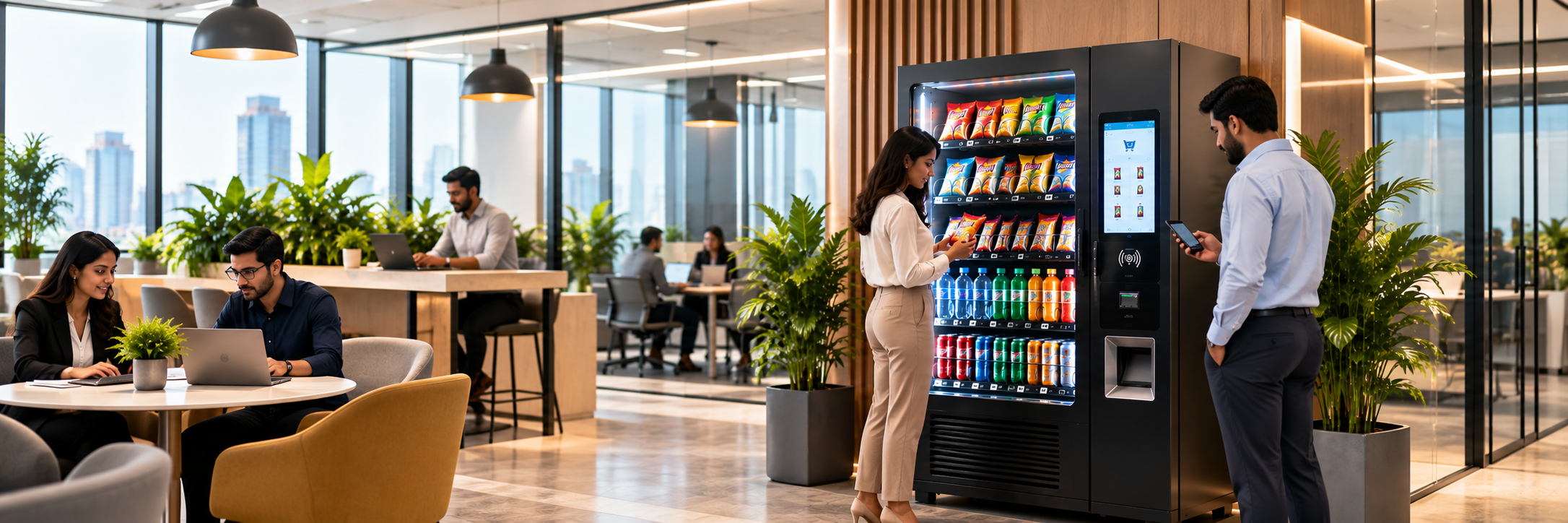
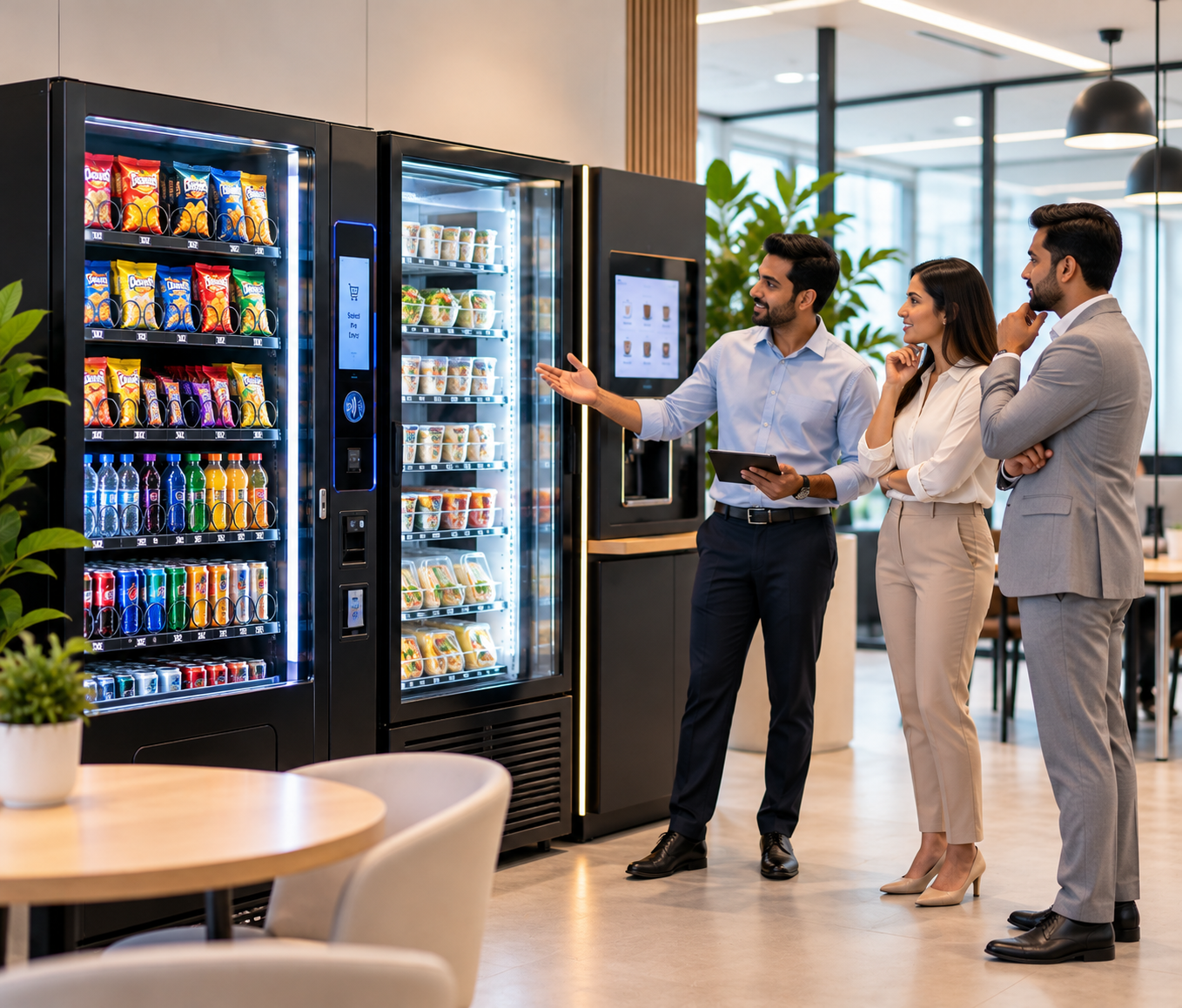
A vending solution should fit the people who will use it and the environment in which it will operate. An office may need snacks and beverages for employees, while a campus could require a broader selection of products throughout the day.
Choosing the right solution involves more than comparing machine designs. Businesses should evaluate product requirements, location, payment methods, inventory management and the level of operational support available.
The first step is understanding who will use the machine and when they are likely to use it.
Consider the following:
Offices and coworking spaces may need convenient snacks, beverages and selected ready to eat products. Factories and industrial workplaces may require access that accommodates shift timings. Educational campuses may need a product mix suited to students and staff. Hospitals and other high footfall environments may have varied requirements depending on visitors, employees and operating hours.
These are starting points rather than fixed rules. Actual requirements depend on footfall, available space, customer preferences and the site's operating conditions.
The product range should reflect local demand and the capabilities of the vending equipment.
Possible categories include packaged snacks, namkeen, chocolates, beverages, ready to eat meals, chilled products and everyday essentials where appropriate.
Before finalising the assortment, consider product size, packaging, storage requirements, shelf life and expected demand. Products requiring refrigeration need suitable equipment and storage procedures.
A relevant product mix is usually more useful than filling every available slot with items that may not suit the audience.
The purchasing process should be straightforward for the intended users. Depending on the machine, available options may include QR based payments and other supported cashless methods.
Businesses should check which payment methods are available, how transaction failures are handled and whether users need to register or install an application.
The best choice is one that works reliably for the intended audience and fits the site's requirements.
Businesses generally need to understand who is responsible for the machine and its day to day operation.
With a self managed arrangement, the business may need to coordinate product sourcing, stock, replenishment and maintenance, depending on the agreement.
A managed vending model can place more of these responsibilities with an operating partner. Services may include machine deployment, product curation, warehousing, inventory management, logistics, refilling and maintenance coordination.
The scope varies by provider and contract. Businesses should confirm the division of responsibilities before making a decision.
A vending machine needs regular attention to remain useful. Stockouts, unsuitable product selections and unresolved technical issues can affect the customer experience.
Ask prospective providers how they track inventory, plan refills, handle product changes and respond to machine problems. It is also worth confirming how service requests are raised and which party is responsible for maintenance costs.
Clear operating processes can make a significant difference after installation.
The financial model should be understood before deployment. Depending on the provider, an arrangement may involve equipment purchase, rental, a managed service or another agreed commercial structure.
Review installation costs, product pricing, service charges, payment responsibilities and any revenue sharing terms that apply. Do not assume that every provider offers a no cost installation or the same commercial conditions.
The objective is to compare the complete operating arrangement, not only the initial machine cost.
A vending solution may need to evolve as footfall, working patterns or product preferences change.
Consider whether the provider can adjust the assortment, support additional machines or serve more locations if requirements grow. Also clarify how product changes, performance reviews and service arrangements will be managed.
Planning ahead helps businesses select a solution that can adapt to operational needs.
Vendifresh offers a managed approach to vending that can bring together equipment deployment, product selection and ongoing operations. Depending on the agreed service scope, support can include inventory management, logistics, refilling and maintenance coordination.
Businesses can assess their location, audience, product requirements and operating expectations to identify a suitable vending setup.
Choosing the right vending solution requires a clear understanding of your audience, product needs, payment preferences and operating responsibilities.
By evaluating the full service model before installation, businesses can make a more informed decision and select a solution that supports convenient access to products and consistent day to day operations.
Vendifresh is a technology-enabled automated retail company focused on making everyday food and beverages more accessible, convenient and available when people need them.
