Workplace convenience is about more than having a cafeteria or pantry. Employees may need a quick snack between meetings, a beverage during a late shift or a ready to eat meal when the cafeteria is closed. Smart vending offers businesses another way to make these everyday essentials accessible within the workplace.
By combining automated retail, digital payments and managed operations, smart vending machines can support changing employee needs without requiring a traditional staffed counter.
Smart vending machines are automated retail units that allow customers to browse available products, make a purchase and collect their items with minimal assistance. Depending on the machine and its technology, the experience may include digital payments, QR based transactions, inventory tracking and remote monitoring.
Unlike a conventional vending setup, a managed smart vending solution can also include product sourcing, assortment planning, replenishment and maintenance coordination.
Employees do not always take breaks at the same time. Shift based teams, late working professionals and people with back to back meetings may need refreshments outside conventional cafeteria hours.
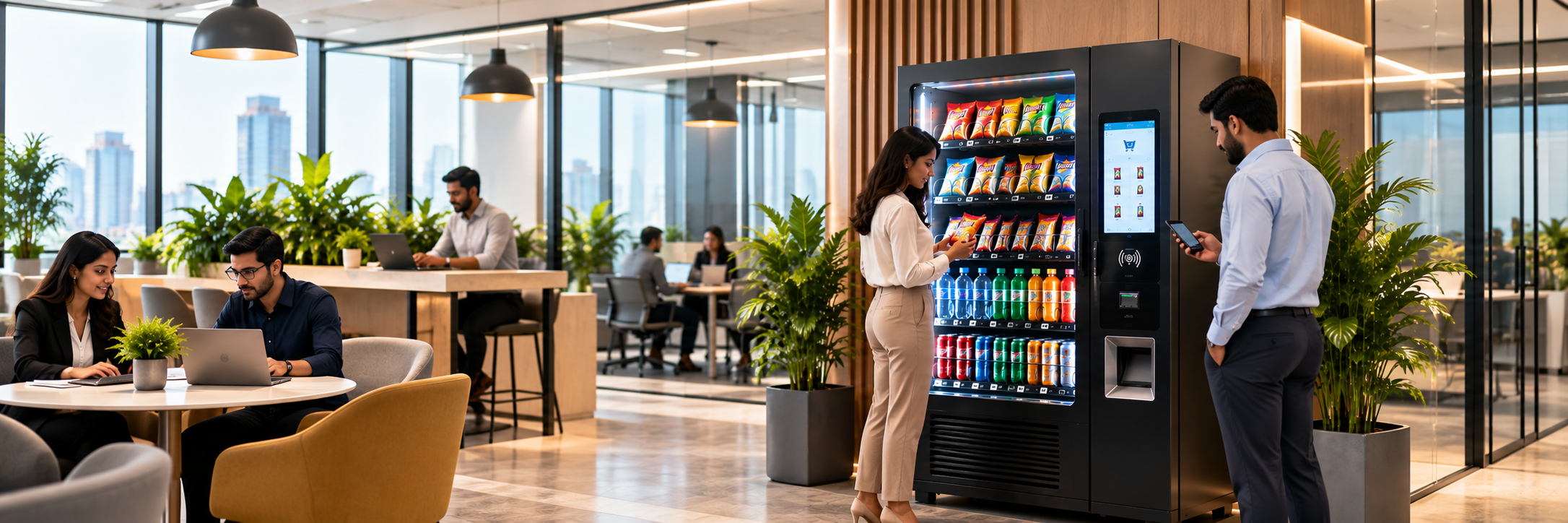
A vending machine placed in a suitable, accessible location gives employees another option for purchasing snacks and beverages without leaving the premises.
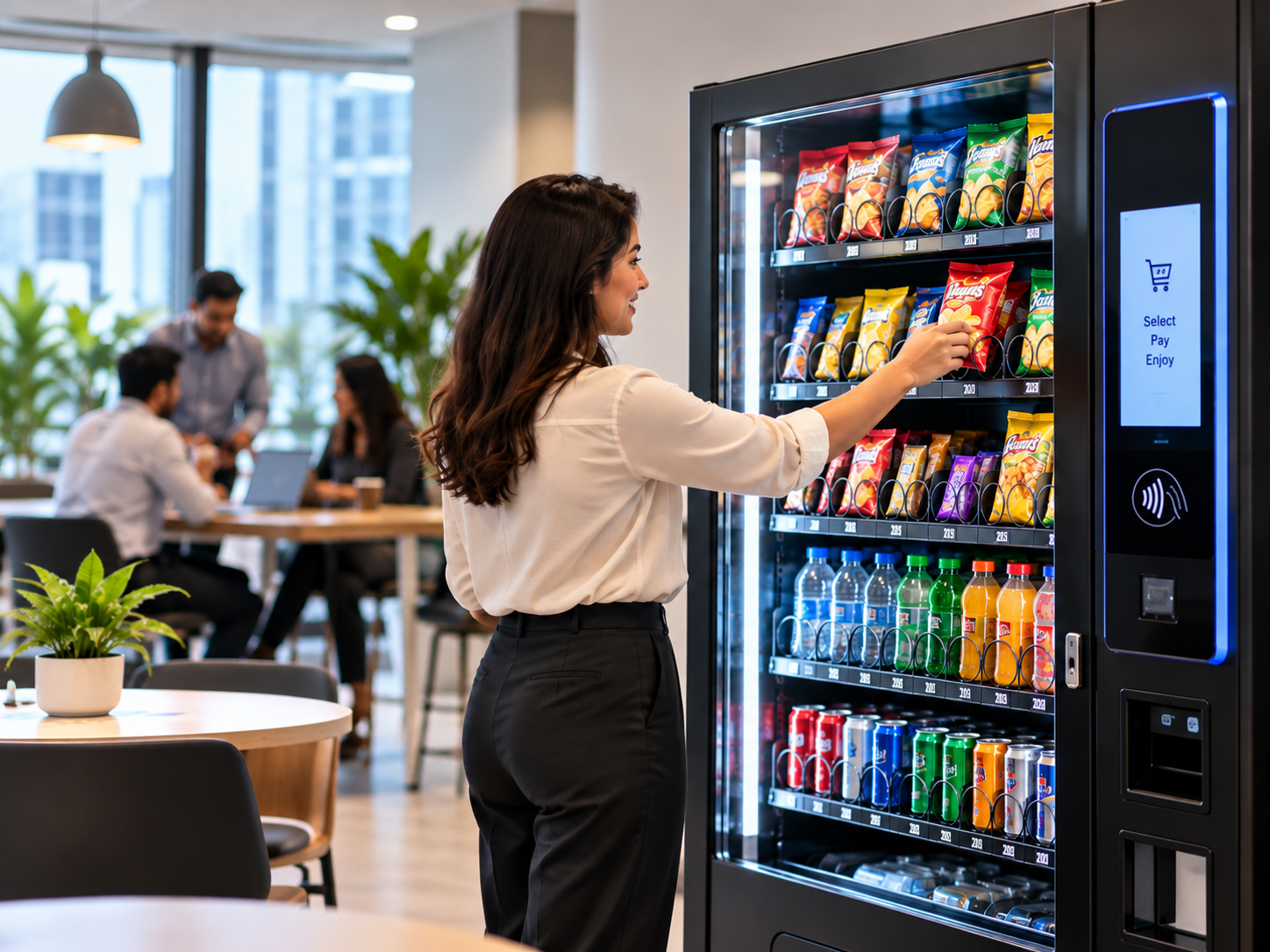
A well planned vending assortment can include packaged snacks, chocolates, namkeen, bottled beverages and selected ready to eat products. The actual range can be adapted to the location, available equipment and customer preferences.
Businesses can review product demand and adjust the assortment instead of relying on a fixed selection that may not suit everyone.
Digital payment options can reduce dependence on cash and make purchasing more convenient. Depending on the machine, customers may be able to use supported QR based or other cashless payment methods.
A straightforward buying process helps employees complete small purchases with minimal interruption to their workday.
Running vending operations involves more than installing a machine. Products must be sourced, stock levels managed, machines replenished and service issues addressed.
With a managed vending model, these activities can be coordinated by an operating partner. This allows facility teams to focus on their core responsibilities while providing an additional workplace amenity.
Before introducing vending, businesses should consider employee footfall, available space, power requirements, preferred product categories and operating hours. The expected demand at an office, factory, hospital or educational campus may differ significantly.
It is also important to understand who will manage replenishment, how products will be selected, which payment options are supported and how maintenance issues will be handled.
The right solution should match the location's needs rather than simply add another machine to the premises.
Vendifresh brings vending equipment and operational services together through a managed approach. Depending on the business requirement, this can include machine deployment, product curation, inventory management, refilling, logistics and maintenance support.
The objective is to make snacks, beverages and other selected products more accessible while helping businesses coordinate the work behind everyday vending operations.
Smart vending gives workplaces another way to provide convenient access to everyday refreshments. When supported by suitable product selection, digital payments and consistent operational management, it can become a practical addition to the workplace experience.
For businesses evaluating vending solutions, the starting point is understanding what employees need and choosing an operating model that can support those needs over time.
Vendifresh is a technology-enabled automated retail company focused on making everyday food and beverages more accessible, convenient and available when people need them.
